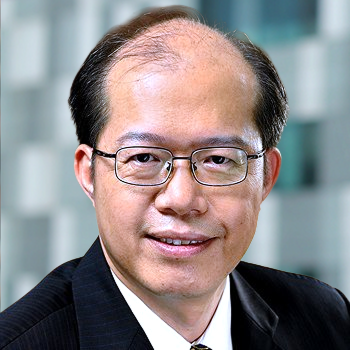
Credit risk is dynamic — it shifts daily with markets, macro conditions, and corporate fundamentals. It should be measured with scientific rigor, not approximated by ratings or backward-looking statistics. This conviction led Professor Duan Jin-Chuan to launch the Credit Research Initiative (CRI) at the National University of Singapore (NUS) in 2009: a public-good platform delivering daily updated corporate default probabilities on a global scale. The core credit metrics and analytics developed by the team have been adopted by the IMF, AMRO, and MAS in their official policy work reports.
In 2017, Criat was founded to bring this scientific foundation into enterprise. What began as a research platform has since grown into a commercial-grade credit science platform — with data, metrics, and analytics continuously expanded well beyond the original NUS-CRI scope. Today, banks, insurers, asset managers, and multilateral institutions across Asia and beyond rely on Criat for credit decisions that demand both rigor and speed.
AI is reshaping what is possible. But it hasn't changed what is hard — measuring credit risk in conditions the market has never seen. Criat's scientific models were designed precisely for this. What AI transforms is how that science reaches users — making credit intelligence more accessible, more conversational, and more deeply embedded in how institutions work. This is Credit Science, AI-Amplified — rigorous enough to trust, intelligent enough to act on.